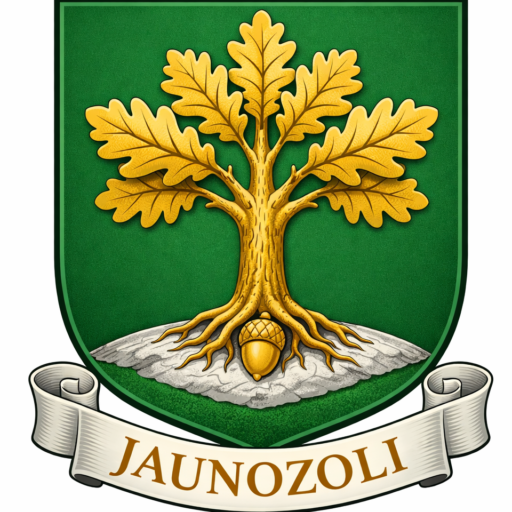
Iecava is a small but historically significant town in the Zemgale region, with roots tracing back several centuries. Archaeological research indicates that people have inhabited the Iecava area since the Stone Age, as evidenced by discovered ancient artifacts [1]. Historically, Iecava developed as an agricultural and trade center, thanks to its favorable geographical location.
During the Middle Ages, the territory of Iecava was inhabited by the Zemgale tribes, known for their strong resistance against the German crusaders [2]. After the conquest of Zemgale in the 13th century, this area came under the control of the Livonian Order, which influenced the local administration and culture. In later centuries, Iecava became part of the Duchy of Courland and Semigallia, a semi-independent state until 1795 [3].
In the 18th century, a manorial estate system began to develop in Iecava, including the Iecava Manor, which was one of the most prominent in the region. The manor’s layout, buildings, and parks remain part of the cultural and historical heritage that characterizes this era [4]. After the incorporation of Latvian territory into the Russian Empire, Iecava became an important agricultural and logistics center.
During the interwar period of Latvian independence, Iecava continued to develop as an agricultural center of Zemgale with well-organized farms. After World War II, the Soviet regime introduced collectivization in Iecava, resulting in the establishment of several kolkhozes and sovkhozes [5]. During this time, the settlement structure and urban environment underwent significant changes.
Iecava Today
After Latvia regained independence in 1991, Iecava began to develop as an independent administrative unit with its own municipal institutions. The town experienced a new wave of growth, advancing both in business and public infrastructure [6]. Iecava was granted city status in 2021, becoming one of the newest cities in Latvia [7].
Today, Iecava is known for its friendly environment, developed education system, and well-organized infrastructure. The town is strategically located close to Riga and major transport routes. Iecava is also near the Rail Baltica project, which is expected to further boost the region’s development in the future.
Thanks to its rich history and active community, Iecava is becoming an increasingly sought-after place to live and start a business. Its historical roots and modern development create a harmonious balance that characterizes the town.
Sources:
[1] Latvijas Nacionālais vēstures muzejs – Arheoloģiskie izrakumi Zemgalē
[2] Latvijas Vēstures Institūta apgāds – “Zemgales senatne un viduslaiki”, 2010
[3] Latvijas Vēstures arhīvs – Kurzemes un Zemgales hercogistes dokumenti
[4] Valsts kultūras pieminekļu aizsardzības inspekcija – Iecavas muižas vēsturiskais apraksts
[5] Latvijas Padomju enciklopēdija, 1985. gads, 4. sējums
[6] Iecavas novada dome – Attīstības pārskats, 2010–2020
[7] Latvijas Republikas likums “Administratīvo teritoriju un apdzīvoto vietu likums”, 2021.
 English
  Latviešu valoda